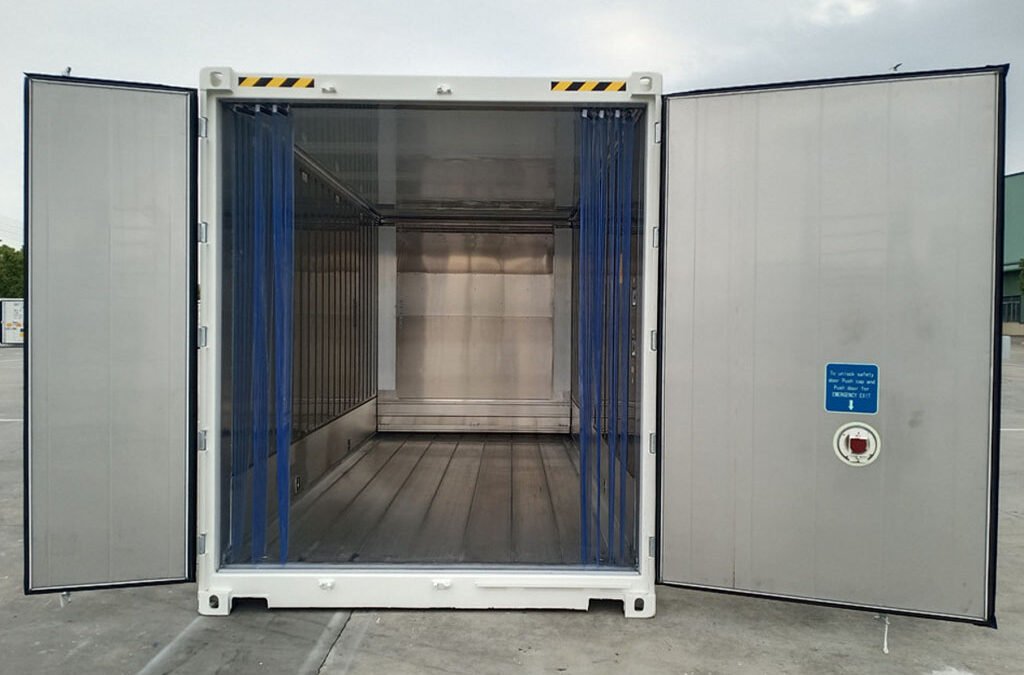
Whether you need council approval for a shipping container depends on three things: how long it will stay, what you will use it for, and where your property sits. A box dropped in a farm paddock for grain storage and a container converted into a granny flat in a suburban backyard sit at opposite ends of the same planning system. This article explains how councils generally think about containers in Australia so you can ask your council the right questions. It is general information, not legal or planning advice — planning rules are set by state legislation and local planning schemes, and only your council can confirm what applies to your land.
The question councils are actually asking
Planning law rarely mentions shipping containers by name. What it asks is whether you are placing a structure or a building, whether that structure is temporary or permanent, and whether the use you are putting it to is permitted in your zone. A container is assessed on those tests like any shed, carport or outbuilding would be.
That leads to a useful rule of thumb: the more your container behaves like a building, the more likely approval is required. Sitting on the ground, unaltered, movable by truck tomorrow, used for storage? Often treated leniently. Fixed to footings, connected to power and water, containing windows, insulation and a bed? That is a building, and it will be assessed as one.
Temporary placement
Most councils take a more relaxed view of genuinely temporary containers. Common examples include a site shed or tool store during construction on the land it serves, a container brought in for a move or renovation, and short-term storage during a specific project.
Temporary placement is often allowed without a separate approval, but that leniency usually comes with conditions:
- A time limit, frequently expressed in months and often tied to the duration of an associated building approval.
- Restrictions on visibility from the street — behind the building line, not in the front setback, sometimes screened.
- A requirement that it be ancillary to work actually happening on the site, not simply stored there.
- Limits on how many containers, and on stacking.
Leave a “temporary” container in place for years and it quietly becomes a permanent structure in the council’s eyes, which is the most common way people end up with a compliance letter.
Permanent placement and development approval
A container intended to stay is generally treated as an outbuilding or, if you are living or working in it, as a class of building with its own requirements. A development application (DA) is typically required when one or more of the following applies:
- The container is fixed to the ground on footings, piers or a slab.
- It is connected to services — power, water, plumbing or sewer.
- It is habitable, or used for sleeping, or for a business that brings customers or staff to the site.
- It exceeds the floor area or height limits your planning scheme sets for exempt outbuildings.
- It sits within a setback from a boundary, road frontage or easement.
- The land carries an overlay: heritage, bushfire, flood, coastal, environmental significance or character.
- The use is not permitted in the zone — for example, commercial storage on residential land.
Where a building is involved, planning approval and building approval are separate steps. Passing the planning test does not remove the need for a building permit or certificate, and a habitable conversion will need to satisfy building code requirements for structure, egress, ventilation, insulation, glazing and, where relevant, energy efficiency.
Exempt and complying development
Every state has a pathway for minor works that do not need a full DA, though the names differ — exempt development, complying development, deemed-to-comply, self-assessable. If a container fits the numeric criteria in that pathway, you may be able to proceed without a DA or with a fast-track certificate from a private certifier.
The criteria usually cover maximum floor area, maximum height, minimum distance from boundaries, distance behind the front building line, total site coverage, and whether the structure is habitable. They also almost always exclude land affected by an overlay. Read the criteria closely: exempt pathways are written as a checklist, and failing any single item throws the whole proposal back into the DA process.
Setbacks, siting and neighbours
Setbacks are the most common practical obstacle. Councils set minimum distances from front, side and rear boundaries, and containers are unforgiving here because they are 2.44 m wide and 2.59 m or more tall with a hard, flat, unrelieved wall. Points worth checking before you buy:
- Easements. You generally cannot place a structure over a sewer or drainage easement, and there is usually a build-over approval process with the water authority if you need to be near one.
- Overshadowing and outlook. A 40ft high cube on a boundary is a 12 m wall from the neighbour’s side.
- Drainage. A container is an impervious surface. Councils will ask where the water goes.
- Bushfire. On bushfire-prone land, construction requirements scale with the assessed bushfire attack level, and steel containers are not automatically compliant once they contain combustible linings, decks or attached structures.
- Cyclone regions. In northern Queensland, the Northern Territory and northern Western Australia, structures must be designed for regional wind loads. A container is heavy, but a heavy object is not the same as an anchored one — cyclonic areas generally require engineered tie-downs to footings, and councils will want documentation.
- Flood. On flood-liable land, expect minimum floor levels and questions about buoyancy and debris.
How the states differ
The overall shape is consistent across Australia — state planning legislation, a state-level exemption pathway, and a local planning scheme administered by your council — but the detail varies considerably. Floor-area thresholds for exempt outbuildings differ between states and sometimes between neighbouring councils. Some jurisdictions expressly address shipping containers in local policy; others rely on general outbuilding rules. Rural and regional councils are frequently far more permissive for genuine agricultural storage on large lots than metropolitan councils are for the same box in a backyard.
Because of that variation, no article can tell you whether your specific container needs approval. What it can tell you is exactly what to ask.
How to check with your council
- Find your property’s zone and overlays. Most councils and state planning portals have an online mapping tool that returns both from an address.
- Search your council’s website for “shipping container”, “outbuilding” or “shed” — many publish a fact sheet.
- Ring the duty planner. Most councils offer free general planning enquiries. Have your address, lot and plan number ready.
- Describe it accurately. Size, height, exact location on the lot, distance to boundaries, whether it will be fixed down, connected to services, or lived in, and for how long it will stay.
- Ask which pathway applies — exempt, complying, or full DA — and whether a building approval is also needed.
- Get it in writing. A follow-up email confirming what you were told is worth having if a complaint arrives later.
- Check other instruments. Body corporate or owners corporation by-laws, covenants on title, and community title rules can prohibit containers even where council would allow them.
Choosing with approval in mind
If approval is uncertain, buy the container that keeps your options open: a standard unmodified unit sitting on bearers, not fixed down, is the easiest thing to justify as movable and the easiest to relocate if the answer comes back no. Save the windows, doors and insulation until the approval position is settled — modifications are far cheaper to add later than a DA is to fix retrospectively.
Our buyer’s guide covers grades, configurations and what to specify, and current stock is listed in the shop, with delivery a flat $350 to any address in Australia. If your council has given you dimensional constraints to work within, email sales@shippingsolutionspty.com or call 1300 000 000 and we will match a unit to them.