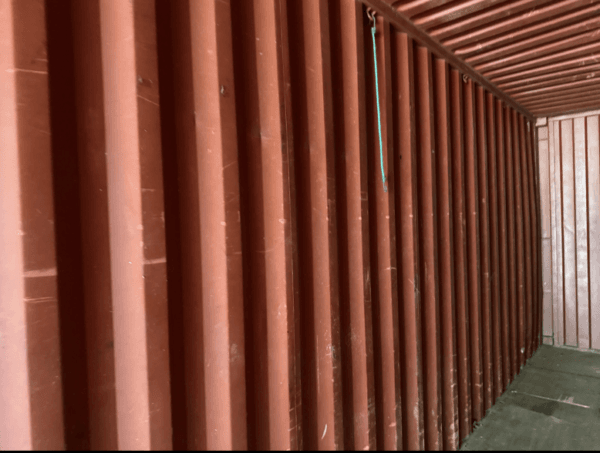
A shipping container gives a business something conventional construction rarely does: a lockable, weatherproof, relocatable 15 or 30 square metres that can be on site next week and gone again a year later. For Australian businesses dealing with remote sites, seasonal demand, leased land and long approval timeframes, that combination is genuinely useful. Here are twelve applications that work in practice, with the details that decide whether each one succeeds.
1. Site offices
The most common commercial conversion. A 20ft container office typically has a personnel door, two windows with security shutters, insulation, internal lining, vinyl or timber-look flooring, lighting, power points, data cabling and a split system. Locked up, it is far more secure than a demountable and it stacks or relocates easily as the job moves.
Key details: insulate properly rather than relying on the air conditioner to fight the steel, place the door where site traffic naturally arrives, and have the electrical work done and certified by a licensed electrician. A 20ft high cube gives the extra headroom that makes a lined ceiling comfortable rather than oppressive.
2. Tool and plant stores
Tool theft is a recurring cost on construction sites, and a container is a hard target: 2 mm corten steel, no windows, and a lock box that shields the padlock from bolt cutters and grinders. Add internal shelving, a workbench along one wall, and heavy-duty racking for consumables.
Worth specifying: a lock box on the doors, ground anchoring or placement where the container cannot simply be lifted, ventilation to control condensation on tools, and lighting on a lead or solar so nobody works in the dark at the back of a 40ft.
3. Workshops and fabrication bays
A 40ft container makes a serviceable one-person workshop: benches down one side, racking down the other, a roller door in the end or side for larger work, and three-phase power if you have machinery. Cutting a side opening lets you work with the container as a covered bay rather than a tunnel — an awning off that opening effectively doubles the working area for very little cost.
Ventilation and extraction are the constraints. Welding, grinding, spraying and solvent work in a sealed steel box need genuine airflow, not a whirlybird. Plan the extraction before you plan the benches.
4. Cool rooms and reefers
A refrigerated container is a purpose-built insulated box with a refrigeration machine already fitted, which makes it the fastest route to cold storage on a site with power. Producers, caterers, breweries, florists, seafood businesses and event operators use them for seasonal capacity without building a cool room.
Practical considerations: reefers draw substantial power and usually need a dedicated supply; the machine needs servicing and clear airflow around it; and if you only need chilled storage rather than active refrigeration, an insulated container with a separate cool room unit fitted can be simpler to run. Check whether your operation needs the box to hold freezer temperatures or just chilled — the answer changes the machine.
5. Pop-up retail and hospitality
Container bars, coffee shops, food outlets and market stalls have become a familiar part of Australian events, breweries, markets and activations. The appeal is straightforward: the shopfront arrives on a truck, opens up with a servery hatch or bi-fold, trades for the season, closes down and is secure and weatherproof between events.
The complexity is regulatory, not structural. Food premises require approval from the local council, with the usual fit-out expectations around surfaces, hand basins, sinks, waste and water. Liquor service brings its own licence conditions. Get the health surveyor’s requirements before you commission the fit-out, not after.
6. Farm and rural storage
On rural properties containers do the work of a shed at a fraction of the cost and none of the build time: chemical and fertiliser storage, feed, fencing gear, irrigation fittings, machinery parts, seasonal harvest equipment, and secure storage for tools on outlying blocks. They are vermin-proof when sealed, and rural and regional councils are generally far more accommodating of agricultural storage on large lots than metropolitan councils are of the same box in a backyard.
Two containers set apart with a roof spanning between them makes an inexpensive covered machinery bay with lockable storage on both sides — a widely used arrangement on Australian farms.
7. Mining, exploration and remote camps
Remote resource operations run on containerised infrastructure because everything must travel by road and survive the journey: sleeping units, ablution blocks, mess and crib rooms, first aid rooms, core sample storage, laboratory space, workshops and secure stores. Containers handle corrugated road transport, lift with standard equipment and demobilise cleanly at the end of a campaign.
Specify for the environment: heavy insulation for the heat, dust sealing, solar and generator provisions, and in cyclone regions, engineered tie-downs to footings with the documentation your client and the council will ask for.
8. Self-storage operations
Container-based self-storage lets an operator start on leased land with modest capital and scale one unit at a time. Each container is an independently lockable, drive-up storage unit, and the whole facility can be relocated if the lease ends or the land is redeveloped.
The commercial detail is site design: aisle widths that let customers back a trailer in, drainage, lighting, fencing, cameras, and enough ventilation in each unit that customers do not come back to mouldy furniture. Council approval for the use — commercial storage — is the first hurdle, well before the containers arrive.
9. Gyms and training spaces
Container gyms suit functional fitness, boxing, PT studios and rural community facilities. A 40ft high cube gives about 30 square metres of floor and enough headroom for overhead lifts once the ceiling is lined. Fitted with rubber flooring, a rig anchored into the container frame, side openings that roll up for airflow, and an awning for outdoor work, it becomes a complete training space that can move with the lease.
Anchor rigs into the container’s structural members rather than the floor ply, and take ventilation seriously — a steel box full of people in a Queensland summer needs real airflow, not just a fan.
10. Emergency and temporary accommodation
After fires and floods, and on projects where housing simply does not exist locally, container accommodation units go in fast and function immediately. Typical builds include a bedroom, ensuite, kitchenette and split system, with services connected on site.
Habitable use is the most heavily regulated container application. Expect building approval requirements covering structure, egress, ventilation, insulation, glazing and energy efficiency, plus wind classification in cyclone regions and construction requirements on bushfire-prone land. Start with the certifier, then specify the container.
11. Equipment shelters and switchrooms
Telecommunications equipment, pump controls, generators, battery banks, solar inverters, irrigation controllers, water treatment plant and site monitoring gear all need a secure, weatherproof, ventilated enclosure — often somewhere with no building and no prospect of one. A 10ft or 20ft container fitted with cable entries, ventilation or air conditioning, an equipment rack and a fire-rated fit-out does the job, and it can be built and commissioned off site then delivered complete.
12. Dangerous goods and chemical stores
Businesses storing fuels, solvents, agricultural chemicals, gas cylinders or other dangerous goods need compliant, ventilated, bunded and separated storage. Container-based DG stores are widely used because they can be sited at the required separation distances from buildings and boundaries, then moved if the site layout changes. This is an area where compliance is specific and non-negotiable — the store must suit the dangerous goods class involved and satisfy your state’s regulator, so specify against the actual requirements rather than adapting a general-purpose container.
Choosing the right starting point
- Anything customer-facing or occupied — offices, hospitality, gyms, accommodation — start with a new one-trip container. Clean panels take paint and vinyl properly, seals are sound, and there is no hidden repair history under the fit-out.
- Anything purely functional — farm storage, tool stores, equipment shelters — a good used unit does the job for less.
- Take the high cube for any use you will stand up in, work in, or line internally. The 305 mm is cheap and you cannot add it later.
- Two 20ft often beat one 40ft for a business: better site flexibility, easier access, and you can separate uses or relocate one unit independently.
- Sort approvals before you modify. An unmodified container on bearers is easy to justify and easy to move; a fitted-out one is neither.
Our buyer’s guide covers grading, door options and what to specify for a conversion, and current containers, cabins, reefers and modified units are listed in the shop, with delivery a flat $350 to any address in Australia. To talk through a specific business application, email sales@shippingsolutionspty.com or call 1300 000 000.